















Why you don't need to spend a fortune to get your Omega-3 supplement
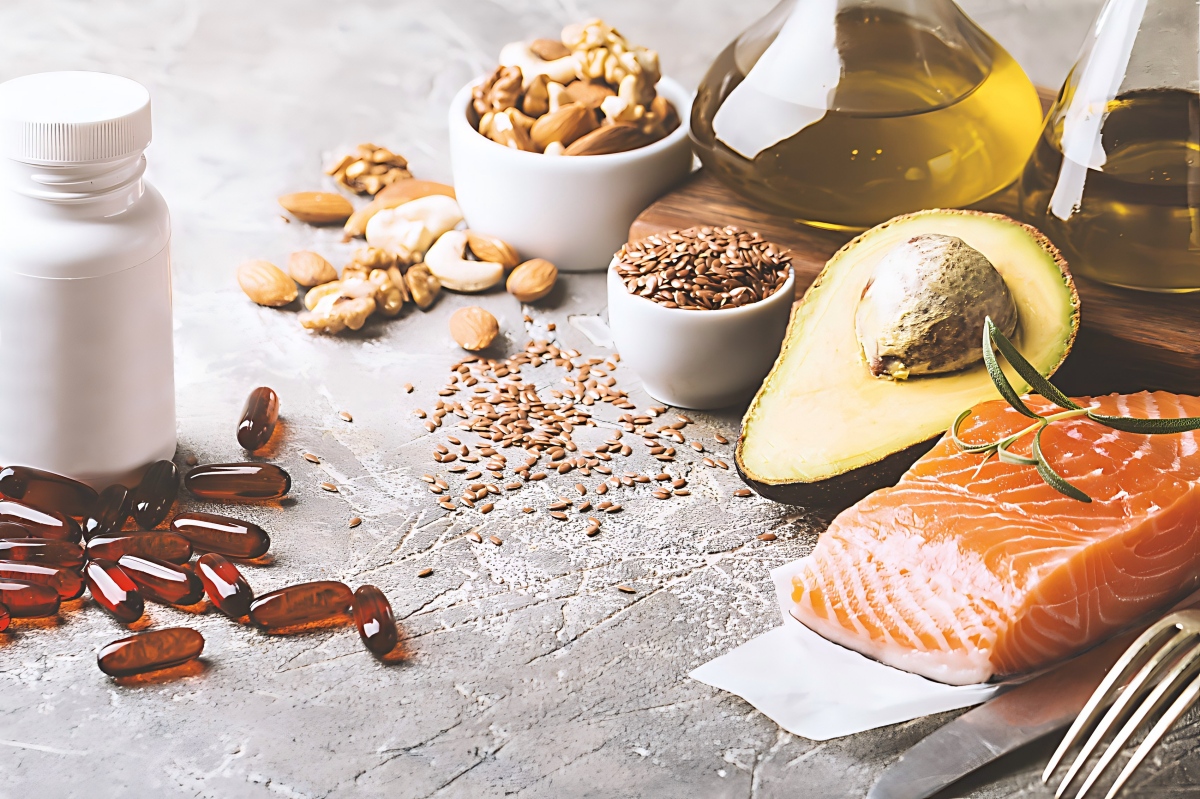
Omega-3 fatty acids (especially EPA and DHA) are essential for heart, brain and joint health. However, fish oil supplements and wild salmon on the market are expensive, which prohibits many people. The good news: For less than $1 a day, you can get enough Omega-3s. The key is to choose the right sources—some cheap foods are even more effective than expensive supplements.
This article will list for you the 5 most cost-effective sources of Omega-3 when you are on a limited budget, and tell you how to avoid the trap of "pseudo-saving money".
First, distinguish ALA from EPA/DHA: the core principle of saving money
There are three main forms of Omega-3:
ALA (alpha-linolenic acid): From plants, the human body can only convert about 5-10% into useful EPA/DHA.
EPA and DHA: come directly from marine sources (fish, algae), and are the main players in anti-inflammatory and brain-protecting effects.
Money-saving strategies: If you're not looking for the highest conversion rates, pure plant sources of ALA (like flaxseed) are extremely low cost; if you need real EPA/DHA, small canned fish are the way to go - they're much cheaper than supplements.
5 Best Budget-Friendly Sources of Omega-3s (Ordered by Value for Money)
1. Canned sardines - the "king of cost-effectiveness" of EPA/DHA
Price per 100 grams: about 1.2-2.5 US dollars (about 8-15 yuan domestically)
Omega-3 content: 1.8-2.2 grams (of which EPA+DHA is about 1.5 grams)
Daily cost: Eat 50 grams for only $0.6-1.3
Sardines are small fish, their heavy metal accumulation is much lower than that of tuna, and they are rich in calcium (eat with bones). Opt for a water- or ketchup-soaked version to avoid over-processing. Eat 2-3 times a week to meet your EPA/DHA needs.
2. Flaxseed (or flaxseed meal) – the cheapest plant source of ALA
Price per kilogram: about $3-5 (bulk flaxseed)
Omega-3 content: Approximately 2.3 grams of ALA per 10 grams of flax seeds
Daily Cost: About $0.06 for 20 grams of flaxseed meal
Key tip: Whole flax seeds are not digestible and must be ground into powder or purchased freshly ground. Add to oatmeal, yogurt or baked goods. Note: Flaxseed does not contain EPA/DHA and is suitable as a basic supplement.
3. Chia seeds - absorb water and expand, filling you up and saving money
Price per kilogram: about $8-12 (slightly more expensive than flaxseed, but still cheap)
Omega-3 content: Approximately 2.5 grams of ALA per 15 grams
Daily cost: approximately US$0.12-0.18 for 15 grams
Chia seeds do not need to be ground and can be directly soaked in water or added to pudding. It's high in fiber and protein, which delays hunger. Rotate with flax seeds to avoid flavor fatigue.
4. Canned mackerel (mackerel) - extremely high in DHA content
Price per 100 grams: about 1.5-3 US dollars (common in domestic supermarkets)
Omega-3 content: 2.5-3.0 grams (DHA accounts for over 40%)
Daily cost: about $0.75-$1.50 for 50 grams
Mackerel is richer in oil than sardines, and its DHA content is particularly outstanding (good for the brain). Be aware that smoked or salted versions are high in sodium, prefer the water-soaked original.
5. Free range eggs – a “little helper” for daily matching
Price per piece: approximately US$0.3-0.6 (free range/Omega-3 rich variety)
Omega-3 content: 1 piece is about 0.1-0.2 grams (including a small amount of DHA)
Daily cost: 2 pieces, about US$0.6-1.2
Regular eggs are extremely low in Omega-3 (only 0.02 grams), so look for eggs labeled "Rich in Omega-3" or "Free Range" on the packaging. It cannot be used as a primary source, but can be used in conjunction with the above foods to add variety.
Save money and avoid pitfalls: These 3 “high price sources” are actually not cost-effective
Wild salmon: The price is 5-10 times that of sardines, but the Omega-3 content is only 20-30% higher. Frozen farmed salmon is slightly more cost-effective, but still not as good as canned small fish.
High-end fish oil supplements: A $30 bottle may provide only 60 grams of Omega-3, while a similarly priced can of sardines provides more than 150 grams.
Walnuts: Although healthy, they only contain about 2.5 grams of ALA per 100 grams, but the price is more than 4 times that of flax seeds.
Practical Solution: Omega-3 Meals for Under $1 a Day
Meals | food | Cost (USD) | Omega-3 Sources |
breakfast | 20g flaxseed meal + oats | 0.06 | ALA 4.6g |
lunch | 50g sardines on whole wheat bread | 0.80 | EPA/DHA 0.75g |
dinner | Sprinkle 15 grams of chia seeds on salad greens | 0.15 | ALA 2.5g |
total | 1.01 | Approximately 7.85 grams of total Omega-3 (including 0.75 grams of EPA/DHA) |
*Note: The recommended daily EPA+DHA for adults is 0.25-0.5 grams. The above plan has exceeded the requirement. *
FAQ
Question: Is it okay to eat only flax seeds without fish?
Yes, but you need to consume at least 3-4 times more ALA to make up for the low conversion rate. Vegans recommend additional supplementation with algae oil DHA (costs about $5-8 per month).
Q: Does canned fish contain too much sodium?
Choose between "water-soaked" or "low-sodium" versions. Draining the soup after opening the can can reduce sodium by about 30%.
Q: How to store flaxseed meal to prevent oxidation?
Buy whole flaxseeds and grind them freshly in a coffee grinder, or refrigerate the ground flaxseeds. A bitter taste (signs of oxidation) may develop after two weeks at room temperature.
Conclusion
When the budget is limited, the combination of canned sardines + flax seeds is the best solution - the former provides directly usable EPA/DHA, and the latter supplements ALA at a very low cost. For less than $1 a day, you can get far more than the recommended intake of Omega-3s. Next time you're shopping, skip those expensive superfoods and fancy supplements and just grab a few boxes of sardines from the canned section.