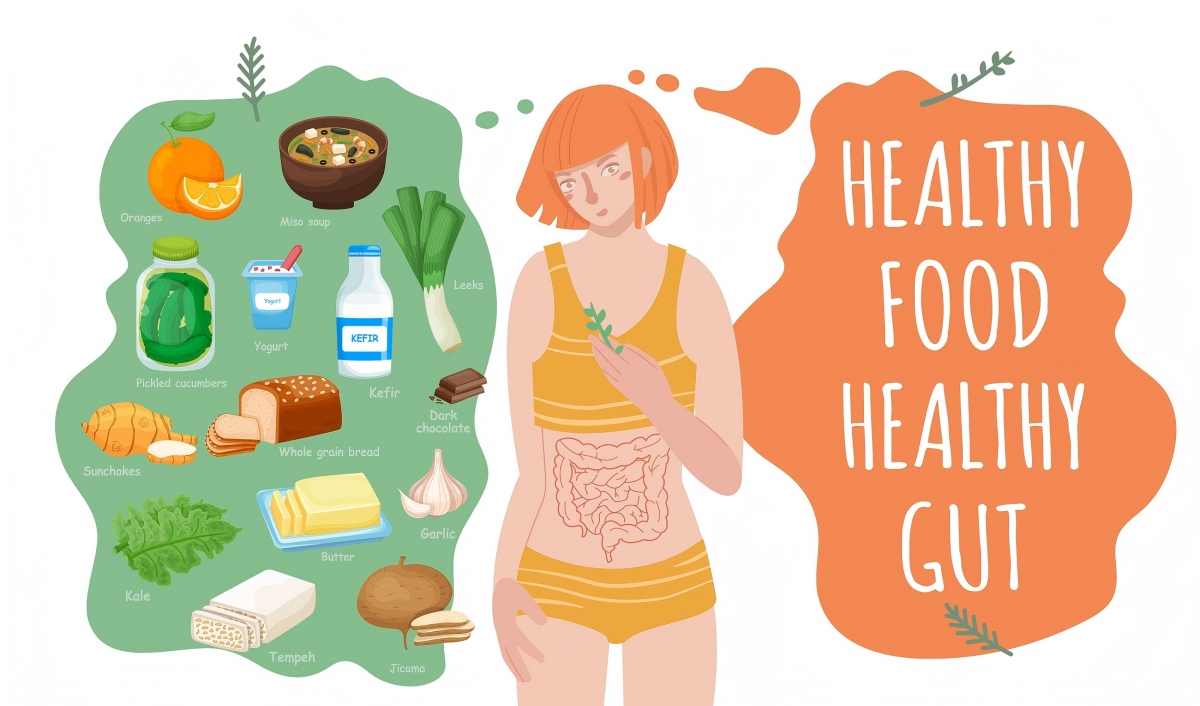

















Although probiotics and prebiotics have similar names, they are two different substances and work together in a very clever way to maintain our gut health.
To put it simply, it can be understood with a metaphor:
Probiotics are like planting new, beneficial flowers (good bacteria) directly into your gut garden.
Prebiotics are like fertilizing and watering all the good flowers you already have in your garden (and newly planted ones too), helping them grow stronger.
Let's break down their differences and synergies in detail below.
1. What is the difference between prebiotics and probiotics?
Features | Probiotics Prebiotics | Probiotics Prebiotics |
Definition | A class of living microorganisms that, when ingested in sufficient quantities, can produce health benefits for the host (you). | A food ingredient (mainly dietary fiber) that cannot be digested by the human body, which can selectively stimulate the growth and activity of one or several beneficial bacteria already in the intestine. |
Popular understanding | "Foreign aid" - directly supplemented "good bacteria". | “Food” – food for “good bacteria”. |
Essence | Bacteria (or yeast) are living organisms. | Dietary fiber/oligosaccharides are foods. |
Primary source | Fermented foods: yogurt, kefir, kimchi, miso, kombucha, etc. | High-fiber foods: onions, garlic, bananas, oats, beans, asparagus, chicory root, etc. |
For digestive system | They are alive in themselves and directly participate in the work, helping to maintain the balance of intestinal flora and inhibit bad bacteria. | They cannot be digested by the stomach and small intestine. After reaching the large intestine intact, they are decomposed and used by beneficial bacteria to promote the growth of beneficial bacteria. |
tTolerance | Afraid of heat, stomach acid, and bile. Survival rate is the key to choosing probiotics. | It is very stable, resistant to heat, acid and alkali, and can easily pass through the upper gastrointestinal tract. |
2. How do they work together?
Their relationship is complementary and indispensable. If you compare your gut to a garden:
Planting (the role of probiotics):
When your garden (gut flora) becomes barren or overgrown with weeds (bad bacteria) due to various reasons (such as illness, antibiotics, stress), you may choose to directly introduce some high-quality flowers (probiotics) to re-enrich the garden's ecology. These "foreign aid" flowers will go to work immediately, suppressing the growth of weeds.
Fertilization (the role of prebiotics):
It’s not enough to plant flowers, they need nutrients to thrive and reproduce. Prebiotics are special fertilizers for these flowers. When you fertilize your garden at the same time, not only do your newly planted flowers (probiotics) grow better, but the vulnerable "native" good flowers that are already in the garden (the original good bacteria in your gut) are also nourished and begin to multiply.
The process of collaborative work is as follows:
After probiotics enter the intestines, they face a fierce battle with bad bacteria to compete for living space and food.
Prebiotics come on the scene at this time. As an "exclusive supplement", they can only be used by good bacteria (including supplemented and foreign probiotics), and bad bacteria cannot eat them.
After good bacteria eat prebiotics, they will multiply in large numbers, produce more beneficial substances (such as short-chain fatty acids), lower the pH value of the intestines, and create an acidic environment more suitable for their own growth while inhibiting bad bacteria.
As a result, the team of good bacteria grows stronger and stronger, gradually taking over, the intestinal flora is restored to balance, and your intestinal health is improved.
To summarize the relationship between the two:
Probiotics are the "good soldiers" of direct supplementation.
Prebiotics are the "military food" that feeds "good soldiers".
Synbiotics (combination products of probiotics + prebiotics) are a "battle package" that provides both "soldiers" and "military rations", and the effect is often better than using either one alone.
Therefore, if you want to maintain good intestinal health, you should not only pay attention to supplementing live probiotics, but also pay attention to consuming enough prebiotic-rich foods (such as vegetables, fruits, whole grains), so that your intestinal garden can continue to flourish naturally.