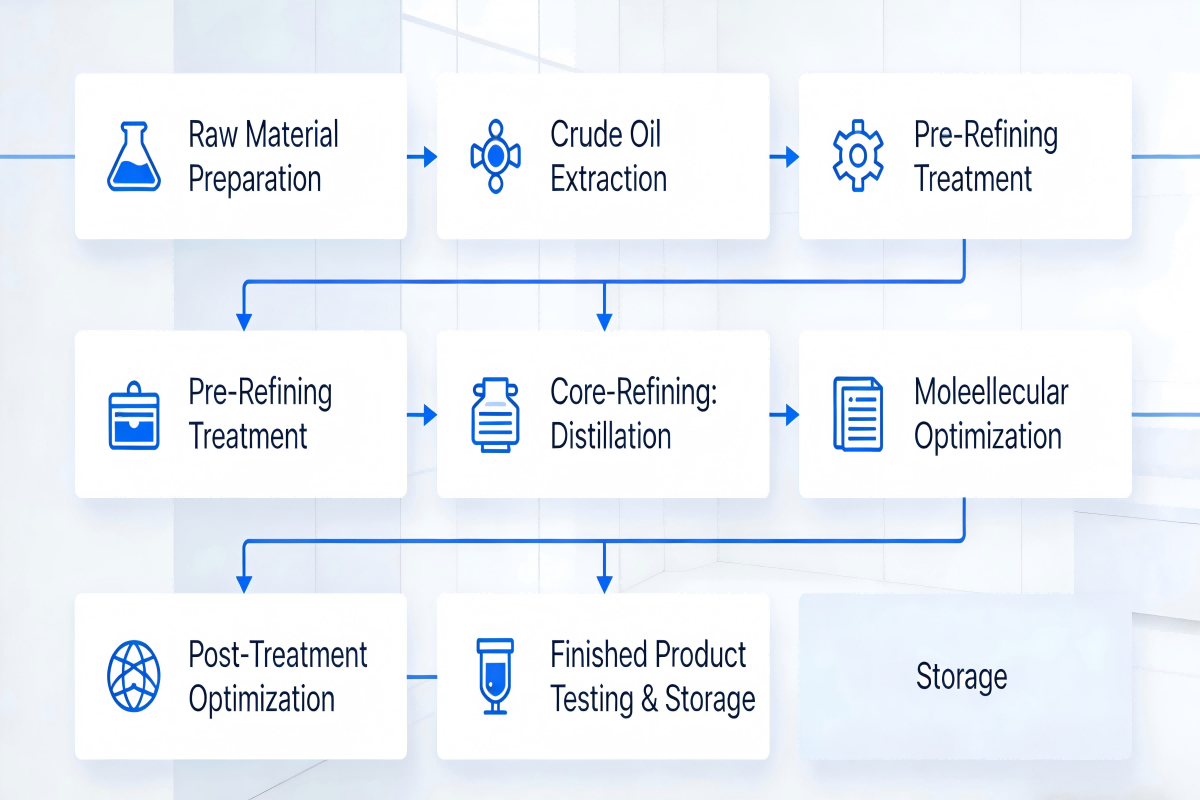
















1. Raw Material Collection and Pretreatment
Raw Material Selection: Deep-sea fish rich in Omega-3 (EPA/DHA) (such as sardines, mackerel, salmon, anchovies) or fish processing by-products (fish heads, viscera, fish skin, etc.) are preferred.
Preservation Treatment: Raw materials require rapid low-temperature storage or direct processing to prevent oil oxidation and rancidity.
Washing and Crushing: After removing impurities, the raw materials are chopped or ground into a slurry to increase oil release efficiency.
2. Oil Extraction
Cooking and Separation:
The fish slurry is heated with indirect steam (usually 85–95℃) to denature proteins and rupture cells, releasing oil.
Crude fish oil, aqueous phase, and solid residue (fishmeal raw material) are separated by centrifugation or pressing.
Solvent Extraction (Partially Used):
For raw materials with low oil content, food-grade solvents (such as hexane) can be used to further extract residual oil, followed by solvent recovery.
3. Crude Oil Refining (Multi-stage Purification)
Degumming: Removes phospholipids and other gums; adds hot water or acid (e.g., phosphoric acid) and centrifuges.
Deacidification: Neutralizes free fatty acids with alkali (e.g., sodium hydroxide); removes soapstock by centrifugation, reducing acid value.
Decolorization: Adds activated clay or activated carbon to adsorb pigments, oxidation products, and residual impurities, improving oil color.
Deodorization: Passes steam under high vacuum (≤1 mbar) and high temperature (180–220℃) to remove volatile odor substances (e.g., aldehydes, ketones).
Wintering (Dewaxing): Low-temperature cooling (0–5℃) crystallizes high-melting-point saturated fats and waxes; filtration improves low-temperature transparency of the fish oil.
4. Concentration and Modification
Molecular Distillation/Supercritical Extraction:
Separates EPA/DHA from other components through high-vacuum short-path distillation to obtain high-concentration Omega-3 products (e.g., triglyceride type, ethyl ester type).
Ethyl ester fish oil can be enzymatically re-esterified into a more easily absorbed triglyceride form.
Antioxidant Treatment: Added natural antioxidants (such as Vitamin E and rosemary extract) to prevent oxidation.
5. Quality Testing and Standardization
Physicochemical Indicators: Testing for acid value, peroxide value, anisidine value, heavy metals (mercury, lead, etc.), polychlorinated biphenyls (PCBs), dioxins, and other contaminants.
Active Component Analysis: Determination of EPA/DHA content using gas chromatography (GC) or high-performance liquid chromatography (HPLC).
Standardized Formulation: Adjusting Omega-3 concentration and adding nutrients such as Vitamin D according to product requirements.
6. Packaging and Storage
Nitrogen-Filled Packaging: Using opaque capsules or dark bottles, filled with nitrogen to isolate oxygen and prevent oxidation.
Low-Temperature and Light-Proof Storage: Temperature and humidity are controlled throughout the process to maintain stability.
Key Technologies and Quality Control
Pollution Control: Modern refining technologies can significantly reduce heavy metals and persistent organic pollutants (POPs) to international standards (such as GOED, EPAX, CRN).
Full Traceability: From raw material origin to finished product, compliance with HACCP, GMP, and marine sustainability certifications (such as MSC, IFOS) is required.
Sustainability: Utilizing fishery by-products (such as fish liver, processing waste) to improve resource utilization.
Finished Product Types
Regular Fish Oil: Refined natural triglyceride oil.
Concentrated Fish Oil: Ethyl ester or re-esterified triglyceride type with Omega-3 concentration increased to 50–90%.
Pharmaceutical Grade Fish Oil: Requires higher purity and stability; used in prescription drugs or high-dose supplements.